Cornix Alternative: Self-Hosted, No Signal-Copy Middleman
You joined a Telegram group because someone in it seemed to know what they were doing, and now Cornix holds your exchange API key so it can copy every call that admin makes, the second the admin makes it. That is the entire pitch, and for a lot of traders it works exactly as advertised. But once the novelty wears off, two separate questions tend to surface at the same time. Why is a company you have never met holding the keys to your exchange account. And why are you betting real money on a stranger's calls with no way to check the track record before you subscribed. "I don't want to give my API keys to a third party" is the first half of that. "Why would I trust a server I don't control with trade permissions on my account" is the second half, and Cornix's whole architecture runs straight into both of them at once.
The self-hosted option here is TradeArmor, which I build, so weigh the rest accordingly. TradeArmor is a self-hosted crypto trading platform with built-in BTC/USDC signals carrying a 3+ year track record, 15 technical indicators, a plain-English AI strategy builder, DCA, grid, futures, copy trading, backtesting, paper trading, and tax exports, all running where your API keys never leave your machine. This is not a takedown of Cornix. It is a look at what you are actually trusting when you use it, and what changes once you stop.
Why people look for a Cornix alternative
Cornix launched in 2019 out of Tel Aviv and built a real following on one core mechanic. Browse a marketplace of Telegram and Discord signal groups, pick channels like Binance Killers or AltSignals or Premium Signals, and let Cornix auto-execute every call those groups post directly on your connected exchange account. Alongside that it ships DCA bots, grid bots, and TradingView-webhook bots, so it is not purely a copy-trading tool. But signal copying is the feature the homepage leads with, and it is the feature that makes Cornix structurally different from a bot you configure and run yourself.
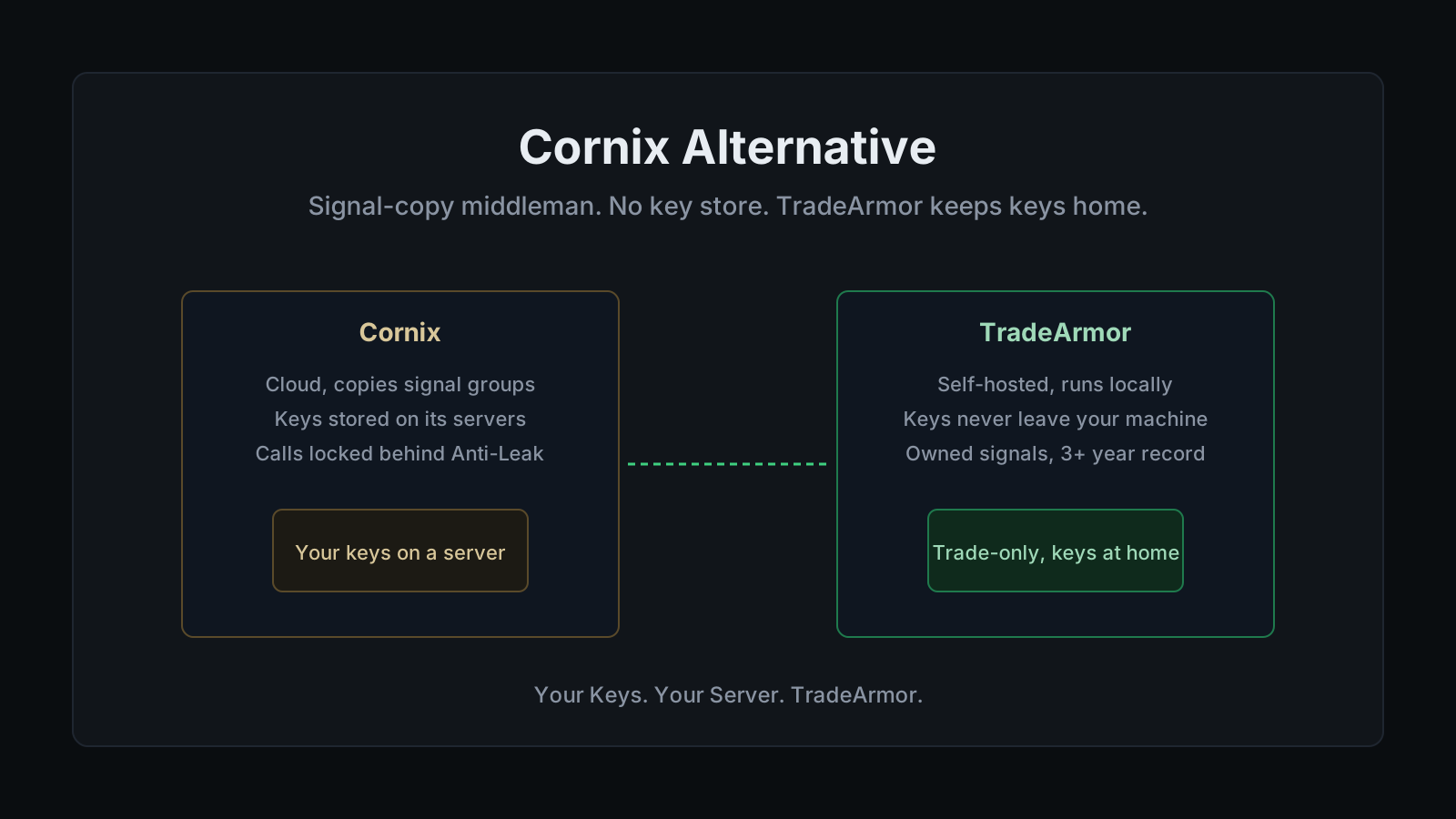
To do any of that from the cloud, Cornix needs your exchange API keys sitting on its own servers. It encrypts them with AES-256 before storage, which is a real and meaningful control, and it recommends trade-only permissions with withdrawal disabled. Both of those are the right calls. Neither one changes the fact that the keys leave your machine and live somewhere you do not control. The full platform breakdown, indicators, strategy modes, and all six exchanges, is worth seeing directly: see TradeArmor's complete feature set here.
Credit where it is due
Cornix gets fund custody right, and it is worth saying plainly. Your coins never move to a Cornix wallet. The bot places and cancels orders through the API, and it cannot withdraw or transfer funds off the exchange when the key is scoped correctly. Two-factor authentication protects the account layer on top of that. If the choice is between Cornix and some anonymous bot demanding withdrawal access "for faster execution," Cornix is the safer of the two by a wide margin, and pretending otherwise would not survive a fact check.
Cornix's Trustpilot page is stacked with five-star reviews from people whose bot placed the trade correctly, which is a real accomplishment and also not remotely the same question as whether the trade itself was any good.
The part that does not go away: two layers of trust, not one
Here is where a signal-copy platform diverges from a plain SaaS bot. With 3Commas or Bitsgap, you are trusting the platform to guard your keys and execute your own strategy correctly. With Cornix, you are trusting the platform to guard your keys, and separately trusting a signal group you may know nothing about beyond a testimonial wall. Cornix even ships a feature called Anti-Leak, built specifically to stop a paying channel's members from screenshotting the calls to someone who has not subscribed. Read that as market research. The entire business model assumes the calls are the product, and the product only holds value if it stays locked behind a paywall you cannot audit from the outside.
That is two points of failure stacked on top of each other, not one. The key custody question is the same one every cloud bot answers by keeping your credentials on a server you do not control. The signal-trust question belongs specifically to the copy-trading model, and no amount of AES-256 encryption on the key store fixes a signal group that stops posting winners and starts posting excuses.
Where TradeArmor draws the line differently
TradeArmor collapses both trust layers by removing the third party from each one. The API key sits in a local config file on your own hardware, a Mac mini, a Linux box, a Raspberry Pi, or a cheap VPS, and it is never transmitted to a TradeArmor server, because no TradeArmor server is involved in running your trades. The permission set is the same two scopes Cornix already recommends, read and trade, never withdraw. The API key security guide covers why that scope choice matters end to end, and the full case for self-hosting versus SaaS lays out the wider trade matrix.
The signal question gets solved differently, not ignored. TradeArmor ships a built-in BTC/USDC signal feed with a 3+ year live track record, running since 2022, on every plan including the entry tier. It is our own engine, not a marketplace of anonymous group admins, and the history is fully searchable in the dashboard rather than living behind a subscription paywall you cannot see through. Run those signals on their own, gate them behind your own indicator rules in hybrid mode, or ignore them entirely and build a fully custom formula strategy. If peer-to-peer copy trading is specifically what you liked about Cornix, TradeArmor has that too. Becoming a signal provider works the same way among TradeArmor users, keys stay local on both ends, and there is no platform in the middle taking a cut or gating the feed behind an Anti-Leak wall.
What you give up, honestly
Cornix connects to a wider exchange list out of the box than TradeArmor does, including MEXC, BingX, Blofin, Hyperliquid, and HTX alongside the majors. TradeArmor ships six exchanges natively, Binance US, Coinbase, Bybit, OKX, Bitget, and KuCoin, with more available on request through the CCXT framework. If your account lives on one of the exchanges outside that list, confirm the connection before you subscribe.
You also give up the marketplace itself. Cornix's real product, underneath the bots, is access to thousands of signal groups you did not have to build a relationship with or vet yourself. That is a genuine convenience if what you specifically want is to follow other traders' calls rather than run your own or trust an in-house engine. TradeArmor does not sell access to other people's Telegram channels. What it gives back is a signal feed with an actual multi-year history instead of a testimonial wall, and a bot that runs the same way whether Cornix's servers are healthy that day or not.
Pricing, side by side
Cornix restructured its plans in February 2026 and no longer offers a free tier or a Starter plan to new signups. As of this writing, Advanced runs $32.99 a month billed annually and includes three active signal bots, five grid bots, five DCA bots, five TradingView bots, and two API slots. Premium runs $52.99 a month billed annually and removes every one of those caps, plus adds a third API slot. Paying month to month instead of annually costs meaningfully more on both tiers, per Cornix's own pricing page. No hidden fees and no commission fees, that page also promises, which is true and also beside the point when the fee ladder itself is built from active-bot counters and API-slot limits. Asset Manager and Community Admin plans sit above that, starting at $99.90 and $146.90 a month, for people trading other people's money or running an entire community, not solo traders.
TradeArmor's Starter plan is $19.99 a month with a 30-day money-back guarantee, and it already includes the bundled signals, the full DCA engine, and all six native exchanges, no bot-count tier and no API-slot counter standing between you and any of it. Cornix's 14-day free trial requires no credit card, which is a fair way to poke around the interface. TradeArmor's 30-day guarantee gives you a full month against a real account instead.
Who should switch
Stay with Cornix if what you actually want is a marketplace of other people's trading calls and you are comfortable with a cloud company holding your keys to execute them. That is a real use case, and Cornix has been running it since 2019 without a publicized custody breach.
Move to a self-hosted Cornix alternative if the two-layer trust question, your keys on a server plus a stranger's calls in your account, is the thing you keep circling back to. Self-hosting resolves the first layer completely. Owning a signal engine with a public, multi-year track record resolves the second one in a way an Anti-Leak paywall never can. If you are coming from ProfitTrailer specifically, TradeArmor also ships a one-click ProfitTrailer migration that imports open positions and DCA legs directly.
Frequently asked questions
Is TradeArmor a drop-in replacement for Cornix? Not technically, because there is no importer between a cloud signal-copy platform and a self-hosted bot. It is a replacement in the practical sense: TradeArmor keeps the DCA and grid mechanics Cornix offers and adds its own signal feed with a public track record, all running on your own hardware. Budget an afternoon to connect an exchange and configure a strategy, and a stretch of paper trading before going live, unless you are migrating from ProfitTrailer, which has a one-click import path.
Is Cornix safe to use? On fund custody, yes. Cornix never holds your coins, it recommends trade-only API permissions with withdrawal disabled, and it encrypts stored keys with AES-256. The part that does not change with better encryption is that those keys live on Cornix's servers rather than yours, and a signal-copy user is also trusting whichever Telegram or Discord group they subscribed to, which is a separate question from whether Cornix itself is well run.
Does Cornix have its own built-in trading signals like TradeArmor? No. Cornix's core product is a marketplace of third-party signal groups, channels like Binance Killers and AltSignals, that you subscribe to and let the bot copy automatically. It also ships DCA, grid, and TradingView-webhook bots you can configure yourself, but it does not publish its own in-house signal engine with a track record you can inspect. TradeArmor bundles a built-in BTC/USDC signal feed with a 3+ year live history on every plan, alongside the DCA and grid engines.
How much does Cornix cost in 2026? Cornix dropped its free and Starter tiers for new signups in February 2026. As of this writing, the Advanced plan is $32.99 a month billed annually with three signal bots, five grid bots, five DCA bots, and two API slots, and Premium is $52.99 a month billed annually with every one of those caps removed. Paying monthly instead of annually costs more on both plans. Asset Manager and Community Admin tiers sit above that, starting at $99.90 and $146.90 a month, aimed at people trading on behalf of others.
What is the best self-hosted Cornix alternative? If the DCA, grid, and TradingView-bot mechanics are what you like about Cornix, but the cloud key store and the blind trust in an anonymous signal group are what bother you, the closest match is a self-hosted bot that keeps the same core automation and replaces the marketplace with an owned signal engine. TradeArmor fits that: trade-only API keys that never leave your machine, a built-in BTC/USDC signal feed with a 3+ year track record, 15 indicators, a plain-English AI strategy builder, DCA, grid, futures, copy trading, backtesting, paper trading, and tax exports, on one price.
Why self-host instead of using a signal-copy platform like Cornix? Because self-hosting removes both trust problems a signal-copy platform asks you to accept, not just one. Your keys stop living on a server you do not control, and your entries stop depending on a group admin you have never met continuing to call good trades. What you take on instead is your own uptime, which for most people means a Mac mini or a Raspberry Pi left running, and you lose access to a ready-made marketplace of other traders to follow. It reduces operational risk. It does not remove market risk, and trading carries the risk of loss regardless of who or what is placing the order.
Bottom line
Cornix and a self-hosted bot agree on the fund-custody basics: trade-only keys, no withdrawal access, funds staying on the exchange. Cornix earns real credit there. Where they diverge is that Cornix's entire model runs on two layers of trust stacked on top of each other, a cloud company holding your keys and a Telegram group's calls you cannot fully audit, sealed behind an Anti-Leak wall that exists to protect the business model rather than you. A self-hosted Cornix alternative like TradeArmor collapses both layers. The key never leaves your machine, and the signal feed is TradeArmor's own, with a 3+ year history you can actually search. You give up a marketplace of thousands of signal groups and a slightly wider out-of-the-box exchange list, and you take on your own uptime. You get custody, a signal engine with a real track record, and one price with no bot-count ladder standing in the way.
If that trade sounds right, the broadest case lives in the best self-hosted crypto trading bot guide, and the cleanest next step is to see the plans and start.
Past performance is not indicative of future results. Signals are algorithmic outputs, not personalized investment advice. Trading cryptocurrency carries substantial risk including the total loss of capital.
Ed Cava