Crypto Trading Bot No Monthly Fee: What Free Costs
You did the math on your setup and the math annoyed you. Charts on one bill, a signal service on another, a bot subscription on a third, and somewhere in there the thought lands: "I pay more for bot subscriptions than I make trading." So you type crypto trading bot no monthly fee into a search bar and hope for a clean answer. The list you get back is not clean. Some of those bots are genuinely free. Some are free the way a printer is free, and the ink is where they get you.
I build one of these, so read this with that bias in the open. TradeArmor is a self-hosted crypto trading platform: built-in BTC/USDC signals with a 3+ year track record, 15 real-time indicators, a plain-English AI strategy builder, DCA, grid, futures, copy trading, backtesting, paper trading, and tax exports, all on hardware you own where your API keys never leave your machine. It is also a paid subscription, which for the first half of this article puts it on the wrong side of the question. I am going to be straight about that, walk the genuinely free routes first, and only make the paid case where it actually holds.
What a crypto trading bot no monthly fee actually costs
Three real routes. Each kills the monthly bill in a different way, and each moves the cost somewhere else. Knowing where is the whole skill.
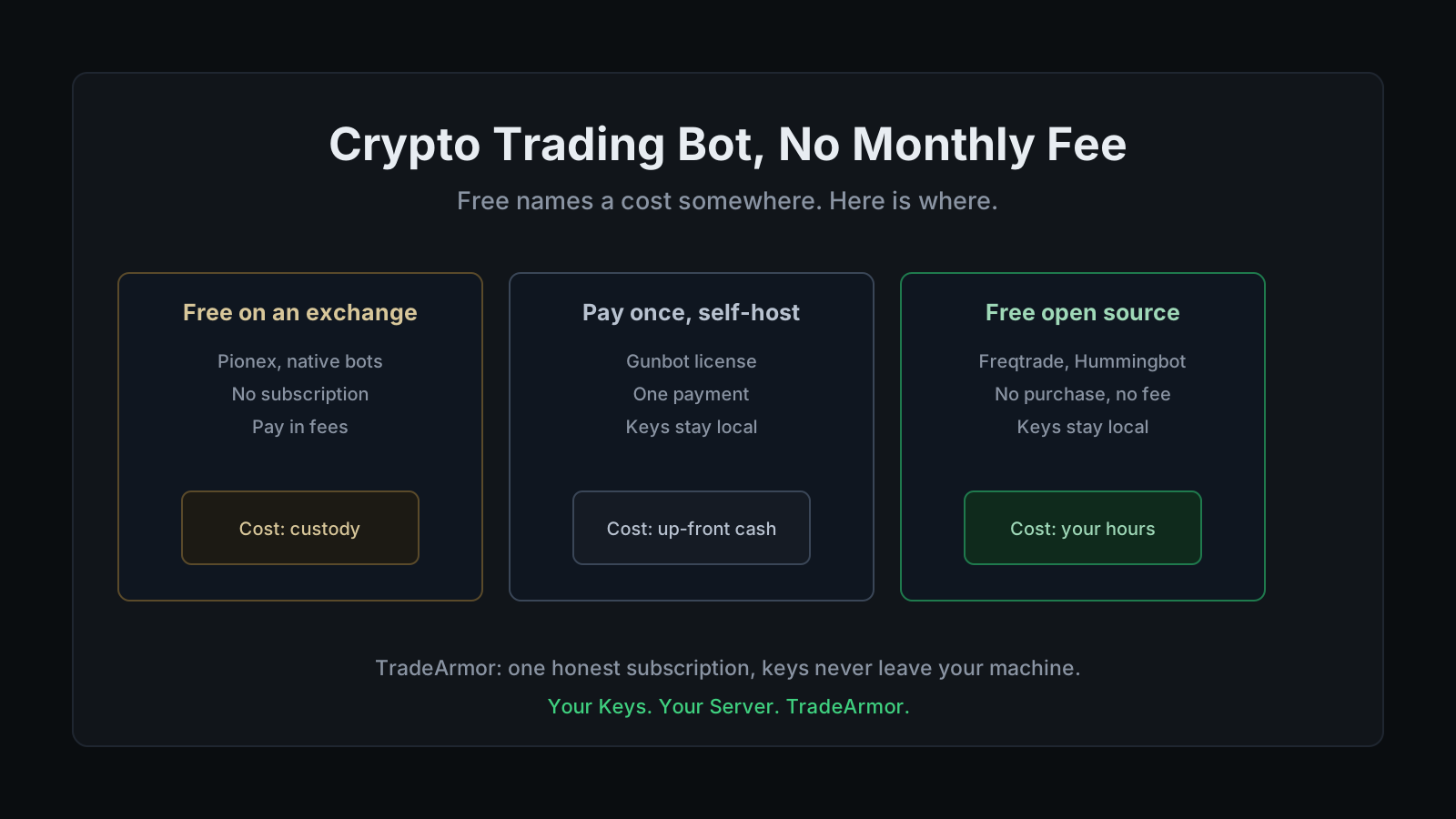
The first route is free bots that live on an exchange: Pionex, and the native grid and DCA bots inside Binance, Coinbase, and KuCoin. No subscription. You pay in trading fees and in custody. The second route is pay-once self-hosted bots like Gunbot: one purchase, no recurring fee, running on your own machine. The third route is free open-source self-hosted bots like Freqtrade and Hummingbot: no purchase at all, running on your machine, costing you setup time.
A crypto trading bot no monthly fee exists in every one of those columns. What you are really choosing between is which currency you pay in: trading fees, one-time cash, custody, or your own hours.
Route one: free bots on an exchange
Pionex is the cleanest example. Sixteen or so built-in bots covering grid, DCA, arbitrage, and rebalancing, no subscription, and a flat 0.05% trading fee that runs about half of what many exchanges charge. For a lot of people that is a real answer, and I will not pretend otherwise. If your whole plan is a grid bot on a couple of majors and you never want to think about hosting, a free exchange bot does the job.
Here is the part the "free" label skips. Pionex is an exchange. To use the free bots, your coins sit in Pionex custody, not on your own keys and not on a venue you already picked for other reasons. The bot is free because you moved your funds onto the platform that runs it. Same shape on the native bots inside Binance, Coinbase, and KuCoin: free to run, and the exchange holding your coins is also the one running the automation. The exchange running your free bot also holds your coins. That is not an accident, it is the business model.
If that trade is fine with you, take it. If the reason you started searching was "I don't want to give my API keys to a third party," a custodial free bot does not solve your problem, it renames it. That custody question is the entire reason the self-hosted versus SaaS breakdown exists, and the Pionex alternative piece goes deeper on the exchange-bot custody model specifically.
Route two: pay once, run it yourself
Gunbot is the reference point here. You buy a lifetime license, currently in the range of $59 for a single exchange up to about $249 for the unlimited tier, pay once, and updates are included with no monthly fee after that. It is self-hosted, so your keys stay on your machine, which puts it on the right side of the custody line. Credit where it is due: a pay-once self-hosted bot is a legitimately good answer to the recurring-cost complaint, and Gunbot has shipped that model for years.
The trade-offs are real too. A lifetime license is a bet that the software keeps getting maintained, and configuring Gunbot's strategy layer sits closer to a developer tool than a setup wizard. It also does not bundle a signal engine with a public track record, so you are still bringing your own strategy or renting one elsewhere. The Gunbot alternative comparison lays out where the pay-once model wins and where it quietly costs you.
Route three: free and open source
Freqtrade and Hummingbot are free in the fullest sense. Open-source, no license, no subscription, yours to run on your own hardware forever. If you can write a Python strategy, or you are willing to learn, this is the genuinely zero-cost answer, and it is a good one. I mean that with no caveat about hidden fees, because there are none.
The cost is you. "Freqtrade is powerful but I can't get it running" is one of the most common sentences in this corner of the internet, and it is common for a reason. No dashboard out of the box worth the name, no bundled signals, no support line, and the DevOps sits entirely on your shoulders. Open source bots are free, the way a puppy is free. If your time is worth less to you than a subscription, this route wins outright, and the Freqtrade alternative piece is honest about exactly where that line falls.
Where a subscription is still the cheaper number
Now the paid case, and only where it holds. TradeArmor charges $19.99 a month at Starter, $49.99 at Pro, and $89.99 at the top, every plan with a 30-day money-back guarantee. That is a monthly fee. It is on the literal wrong side of this article's title. So when is paying it the cheaper move?
When the thing you are actually trying to kill is the stack, not the subscription. Re-read the complaint that started this: "I'm paying TradingView plus a signal service plus a bot, this is insane." That is three recurring bills to do one job: charting, signals, execution. A free exchange bot removes the bot bill and keeps the other two, and now your funds sit in its custody besides. TradeArmor folds the charts, the signals, and the execution into one subscription on one machine you own, with no per-trade markup and no monthly volume cap. One honest bill can beat three, even against a free bot, once you count the signal service and the chart tool the free bot never replaced. The full all-in case lives in the best self-hosted crypto trading bot guide.
The other place the subscription earns its keep is the ProfitTrailer refugee with an open book. If you have positions and DCA legs stranded in a bot that stopped shipping, every free route above means rebuilding from zero. TradeArmor ships a one-click ProfitTrailer migration that imports open positions and DCA legs and matches the EQPRICE buy-gate logic. ProfitTrailer taught a lot of us how to run a DCA bot, then it stopped shipping, and we picked up the work. Signals are algorithmic outputs, not personalized recommendations, and past performance never guarantees future results.
How to price it honestly
Add up the real total, not the headline. A free exchange bot is $0 subscription, plus 0.05% per trade, plus your funds in exchange custody, plus whatever you still pay for charts and signals elsewhere. A pay-once bot is one payment, keys local, plus your own hosting and your own strategy. An open-source bot is $0, keys local, plus real setup hours. A one-bill subscription is a fixed monthly number, keys local, with signals, charts, and execution included and no per-trade cut.
There is no universally right answer in that list. There is a right answer for your hours, your custody tolerance, and how much of the stack you are currently paying for twice. If grid and DCA are specifically your thing, the best crypto DCA bot breakdown goes into how those engines actually decide when to buy and sell.
Frequently asked questions
Is there a genuinely free crypto trading bot with no monthly fee? Yes, several. Open-source self-hosted bots like Freqtrade and Hummingbot cost nothing at all and keep your keys on your own machine, in exchange for real setup and maintenance time. Exchange-native bots and Pionex are free to run with no subscription, but your funds move into that platform's custody and you pay a per-trade fee. A pay-once self-hosted bot like Gunbot removes the recurring fee for a single up-front purchase. "Free" always names a cost somewhere: your hours, your custody, or a per-trade cut.
Why do free crypto trading bots exist at all? Because the bot is rarely the actual product. An exchange gives you free bots to bring your funds and your trading volume onto its books, where it earns the trading fees. Open-source bots are free because a community maintains them for its own use. Neither is charity and neither is a scam. You just want to know which one you are looking at before you fund it.
Does TradeArmor have a free tier? No, and I would rather say that plainly than bury it. TradeArmor is a paid subscription starting at $19.99 a month with a 30-day money-back guarantee, not a free bot. There is a free DCA backtester you can use without an account, but the paid product makes its case by replacing a stack of other subscriptions and keeping your keys local, not by being free. If free is a hard requirement, the open-source route is the honest recommendation.
Is a no-monthly-fee bot safe? Safety has almost nothing to do with the price and almost everything to do with where your keys and coins live. A free custodial bot puts your funds on its platform. A self-hosted bot, free or paid, keeps trade-only keys on your own hardware and never needs withdrawal permission. The API key risk walkthrough covers why two permissions, read and trade, is the only correct set regardless of what you pay.
Will a free bot cost me more than a subscription over a year? It can, and the line item people miss is the rest of the stack. If a free bot still leaves you paying for charts and a signal service, and takes a per-trade fee on top, the annual total can land above a single all-in subscription that bundles those. Price the year, not the monthly headline, and count every bill.
Bottom line
A crypto trading bot no monthly fee is real, and it arrives in three honest shapes: free custodial bots where you pay in fees and custody, pay-once self-hosted licenses like Gunbot, and free open-source bots like Freqtrade where you pay in setup time. TradeArmor is none of those. It is a subscription, and it earns that subscription only in the specific case where you are trying to kill a whole stack of recurring bills and keep your keys on your own machine, not shave one line item off a setup that otherwise stays the same. If you just want free and you have the hours, self-host something open source and keep your custody. If you want one honest bill that folds signals, charts, execution, and tax exports into a platform you run yourself, that is the case for going self-hosted.
The full field comparison lives in the best self-hosted crypto trading bot guide, and the plans are at tradearmor.io/#pricing.
Past performance is not indicative of future results. Signals are algorithmic outputs, not personalized investment advice. Trading cryptocurrency carries substantial risk including the total loss of capital.
Ed Cava