Free Crypto Trading Bot: What Free Actually Means
Type free crypto trading bot into a search bar and the results argue with each other. One page means open-source software you run yourself for nothing. The next means a slick app that is free to install and quietly holds your coins. A third means a free tier that gates every useful feature behind an upgrade. Same two words, three different bargains. If you got here because you are tired of paying more for bot subscriptions than you make trading, that ambiguity is not academic. It decides where your coins sleep at night.
Before I go further, I build one of these, and it is not free. TradeArmor is a self-hosted crypto trading platform: built-in BTC/USDC signals with a 3+ year track record, 15 real-time indicators, a plain-English AI strategy builder, DCA, grid, futures, copy trading, backtesting, paper trading, and tax exports, all on hardware you own where your API keys never leave your machine. It is a paid subscription, which for most of this article puts it on the wrong side of the search you just ran. So I will spend the first half on the routes that are actually free, say honestly what each one costs instead of money, and only make the paid case at the end where it genuinely holds.
Here is the sentence that should shape the whole decision. Free never means costless. It means the cost moved to a place that does not show up on a monthly invoice. Sometimes that place is fine. Sometimes it is your custody, which is the one line item most people searching for a free bot were trying to protect in the first place.
What "free" means in a free crypto trading bot
There are really only three shapes hiding behind the word.
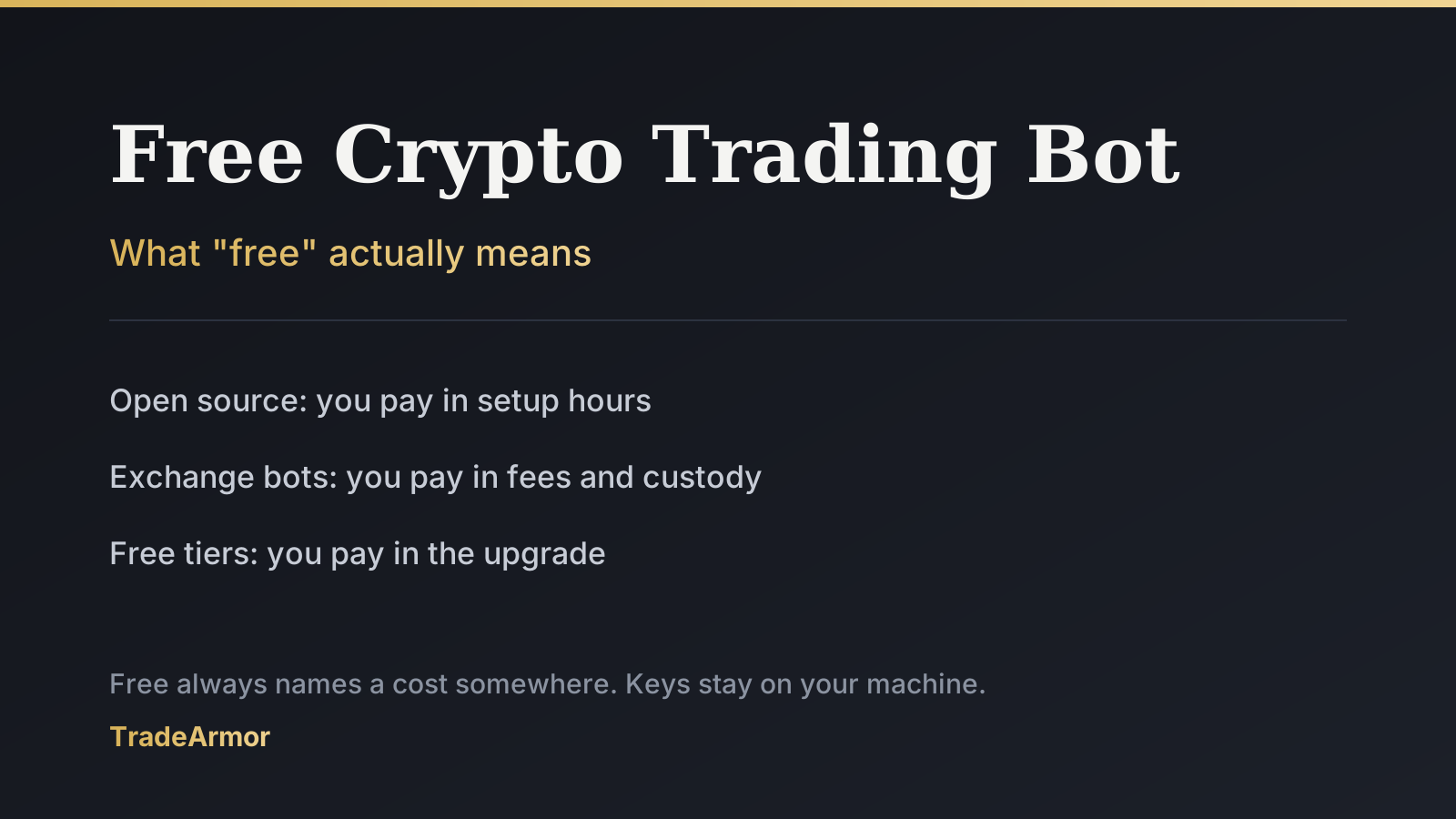
The first is free and open source: software you download and run on your own machine, no license, no subscription, no per-trade cut. The cost is your time. The second is free and custodial: a bot that lives inside an exchange, free to run because your funds are sitting on that exchange while it runs. The cost is custody and a trading fee. The third is not free at all: a SaaS free tier or trial that lets you look but gates the parts you came for. The cost is the upgrade you end up buying.
A free crypto trading bot exists in all three columns. Choosing well is mostly a matter of reading which column you are actually standing in before you fund anything.
If you want the pricing angle spelled out in dollars rather than shapes, the crypto trading bot no monthly fee breakdown runs the same territory from the cost side, and the self-hosted versus SaaS matrix is the deeper reference for where the custody line falls.
The genuinely free route: open source you run yourself
This is the real thing, and I will not hedge it. Freqtrade and Hummingbot are free in the fullest sense. Freqtrade is licensed under GPL-3.0, has been in active development since 2017, carries north of 49,000 GitHub stars, and connects to 10-plus exchanges through the CCXT library. No paid tier. No fee per trade. Your keys stay on your own hardware because you are the one hosting it. If you can write a Python strategy, or you are willing to learn, this is the zero-cost answer, and it is a good one.
The cost is you. "Freqtrade is powerful but I can't get it running" is one of the most repeated sentences in this corner of the internet, and it is repeated for a reason. There is no polished dashboard out of the box, no bundled signal engine with a track record, no support line to email at midnight, and the hosting, the updates, and the strategy design all land on your shoulders. Free software is generous with your money and expensive with your evenings.
If that trade fits you, take it and keep your custody. The Freqtrade alternative and Hummingbot alternative write-ups are honest about exactly where the open-source route wins and where the DevOps tax starts to hurt.
The free-but-custodial route: bots that live on an exchange
Pionex is the cleanest example. Sixteen or so built-in bots covering grid, DCA, rebalancing, and more, no subscription, and a flat 0.05% trading fee that runs under what many exchanges charge. The native grid and DCA bots inside Binance, Coinbase, and KuCoin follow the same pattern: free to switch on, nothing to install, no API key to configure. For a trader who wants a grid on a couple of majors and never wants to think about hosting, that is a legitimate answer.
Now the part the free label skips. To use those bots, your coins live in the exchange's custody, on the same platform that runs the automation. The bot is free because you brought your funds onto its books, where it earns the trading fees whether the bot wins or loses. The exchange running your free bot is also the one holding your coins, and that is the business model, not a footnote.
If that trade is fine with you, it is fine. If the reason you started searching was "I don't want to give my API keys to a third party," a free custodial bot does not solve that problem, it renames it. Your keys are safe because there are no keys; your coins are simply on someone else's platform instead. The Pionex alternative piece goes deeper on the exchange-bot custody model, and the honest answer to are crypto trading bots safe is that a bot is exactly as safe as where your keys and coins live.
The route that only looks free: the gated tier
The third shape is the free tier that is really a storefront. Install for nothing, connect an exchange, and discover that anything past the demo is behind a paywall. "Every feature is behind another upgrade tier" is the pain that follows, and it is not evil, it is just sampling. The free tier is a hallway, and the rooms cost money.
There is nothing wrong with a free trial as long as you read it as a trial. The trap is budgeting a free bot and ending up on a subscription anyway, often stacked on top of the chart tool and the signal service you were already paying for. Which is the exact setup worth pricing out before you decide free won anything.
When free is the wrong thing to optimize
Here is the paid case, placed last on purpose, and only where it holds. TradeArmor charges $19.99 a month at Starter, $49.99 at Pro, and $89.99 at the top, every plan under a 30-day money-back guarantee. That is a monthly fee. On this article's title it loses outright. So when does paying it beat free?
When the thing you are actually trying to kill is the stack, not the subscription. Re-read the complaint underneath most of these searches: "I'm paying TradingView plus a signal service plus a bot, this is insane." That is three recurring bills doing one job: charts, signals, execution. A free exchange bot deletes the bot bill, keeps the other two, and parks your funds in its custody as a bonus. TradeArmor folds charts, signals, and execution into one subscription on a machine you own, with no per-trade markup and no volume cap. One honest bill can beat three, even against a free bot, once you count the signal service and the chart tool the free bot never replaced. The full all-in comparison lives in the best self-hosted crypto trading bot guide, and if DCA is your thing specifically, the best crypto DCA bot breakdown shows how those engines decide when to buy.
The other place a subscription earns its keep is the trader with an open book on a bot that stopped shipping. Every free route above means rebuilding from zero. TradeArmor ships a one-click ProfitTrailer migration that imports open positions and DCA legs and matches the EQPRICE buy-gate logic, so nobody starts over. Signals are algorithmic outputs, not personalized recommendations, and past performance never guarantees future results.
How to choose without kidding yourself
Price the year, not the monthly headline, and count every currency you pay in. A free open-source bot is truly zero dollars, keys local, plus real setup hours. A free exchange bot is zero subscription, plus a per-trade fee, plus your funds in someone else's custody, plus whatever you still pay for charts and signals elsewhere. A gated free tier is zero until it is not. A one-bill subscription is a fixed number, keys local, with signals, charts, execution, and tax exports bundled and no per-trade cut.
None of those is universally right. If your hours are worth less to you than a monthly fee and you like the tinkering, self-host something open source and keep your custody. If you want automation on an exchange and custody does not bother you, a free exchange bot is a fair deal. If you are trying to collapse a stack of subscriptions into one bill without handing your keys to anyone, that is the case a self-hosted paid platform is built for. The API key security walkthrough is worth reading whichever route you pick, because the correct key permissions are the same at every price.
Frequently asked questions
What is the best free crypto trading bot? For a genuinely free bot that keeps your keys on your own machine, the open-source route wins: Freqtrade and Hummingbot cost nothing, run on your hardware, and hide no fees. The catch is setup and maintenance time, since both expect you to write or configure your own strategy. If you would rather not touch a config file, a free exchange bot like Pionex is easier, but your coins move into that platform's custody and you pay a per-trade fee. There is no single best; there is a best for your hours and your custody tolerance.
Is there a completely free crypto trading bot with no hidden cost? Open-source self-hosted bots come closest. Freqtrade is licensed under GPL-3.0, has no paid tier, and takes nothing per trade. The only cost is your time to install it, write a strategy, and keep it running. That is a real cost, but it is not a hidden one. Every other kind of free bot moves the cost somewhere less obvious: a per-trade fee, your funds sitting in someone else's custody, or a free tier that gates the features you actually came for.
Why are some crypto trading bots free? Because the bot is usually not the product. An exchange hands you free bots to pull your funds and your trading volume onto its books, where it earns the fees. Open-source bots are free because a community builds and maintains them for its own use. A SaaS free tier is a sample designed to sell you the paid one. None of those is a scam, but each is free for a specific reason, and knowing the reason tells you where the cost landed.
Does TradeArmor have a free crypto trading bot? No, and I would rather say it plainly than bury it. TradeArmor is a paid subscription starting at $19.99 a month with a 30-day money-back guarantee. There is a free DCA backtester you can run without an account, but the paid product earns its keep by folding signals, charts, execution, and tax exports into one bill on hardware you own, not by being free. If free is a hard requirement, self-hosting an open-source bot is the honest recommendation.
Is a free crypto trading bot safe? Price tells you almost nothing about safety. What matters is where your keys and coins live. A free custodial bot holds your funds on its platform, so its security is now your security. A self-hosted bot, free or paid, keeps trade-only keys on your own hardware and never needs withdrawal permission. The API key risk walkthrough covers why two permissions, read and trade, is the only correct set no matter what you paid.
Bottom line
A free crypto trading bot is real, and it arrives in three honest shapes: free open-source bots like Freqtrade and Hummingbot where you pay in setup hours, free custodial exchange bots like Pionex where you pay in fees and custody, and free tiers that gate the parts you came for. TradeArmor is none of those. It is a subscription, and it earns that subscription only in the specific case where you are collapsing a whole stack of recurring bills into one and keeping your keys on your own machine. If free is the goal and you have the hours, self-host something open source and hold your own custody. If one honest bill that bundles signals, charts, execution, and tax exports on hardware you run sounds better than three, the case for going self-hosted is the next read, and the plans are at tradearmor.io/#pricing.
Past performance is not indicative of future results. Signals are algorithmic outputs, not personalized investment advice. Trading cryptocurrency carries substantial risk including the total loss of capital.
Ed Cava