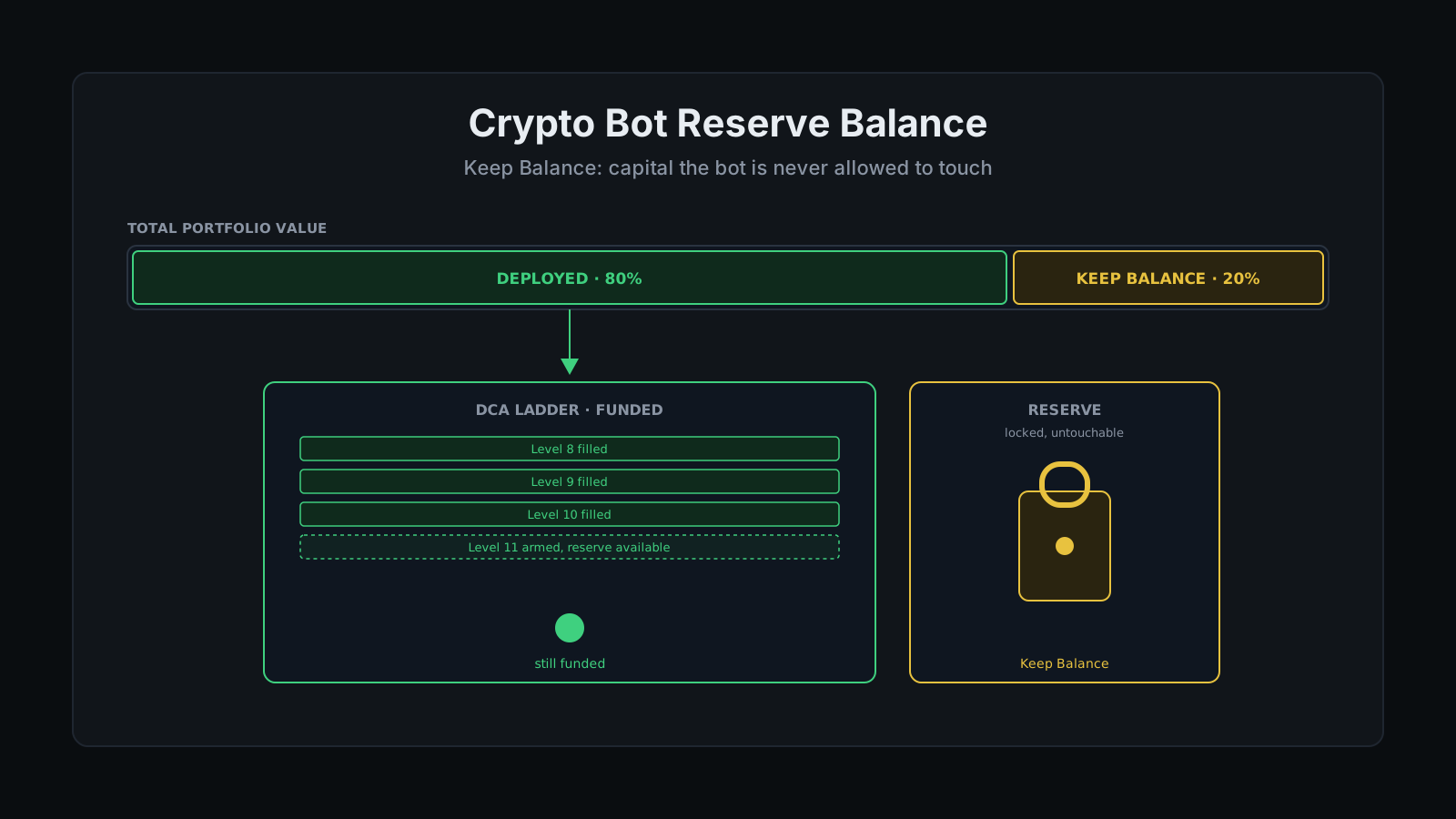
Every DCA bot has one job that matters more than any indicator it runs: staying alive long enough to buy the actual bottom instead of running dry three legs before it. A crash that goes deeper than your backtest expected is not a strategy failure. It is an account that spent every dollar on the way down and had nothing left when the real discount finally showed up. "I want something that just runs" is the entire appeal of automation, right up until the thing that just runs also just spends, and nobody ever told it when to stop.
Most bot subscriptions treat position sizing as the whole risk conversation and leave it there: how big is the trade, where's the stop. Almost none of them ask the second question, which is how much of the account should never get deployed no matter how good the next entry looks, and more than one trader has quietly admitted "I pay more for bot subscriptions than I make trading" while running five DCA levels deep with nothing held back. A crypto bot reserve balance is not a hedge against a bad signal. It is a hedge against a good one showing up right after a string of decent ones already spent the account down to fumes.
I build TradeArmor and I trade on it every day, self-hosted on hardware that's mine, three years of live BTC/USDC signals behind it, 15 real-time indicators, a plain-English AI strategy builder, and DCA, grid, futures, copy trading, backtesting, paper trading, and tax exports on a single engine. Keep Balance is the setting inside that engine that decides how much of your portfolio the bot is never allowed to touch, and it's one of the least glamorous features on the whole platform for exactly the reason it matters: nobody brags about the trade they didn't make. See the full engine here before you decide how much of your own account you're willing to risk running out of runway on.
What Keep Balance Actually Does
Keep Balance reserves a percentage of your total portfolio value as cash the bot is not permitted to touch, full stop. Set it to 20% and the bot treats that fifth of your account as if it doesn't exist for sizing purposes, no matter how attractive the next signal looks or how many DCA levels are still configured and waiting.
Portfolio value here means available balance plus the sum of every open position at current market value, not at the price you originally paid for it. That distinction matters more than it sounds like it should: a portfolio that's up on paper has more room to work with than one that's underwater, and the reserve rule recalculates against the live number every time, not a snapshot from whenever you last checked the dashboard.
Why 100% Deployment Is a Trap, Not a Flex
A bot that runs out of buying power at the exact moment the market gets interesting has not failed at trading. It has failed at arithmetic.
Picture a ten-level DCA ladder on a coin that's down 40% from your first entry. Every level bought in on schedule, the spacing worked as designed, and the bot did precisely what it was configured to do. The problem shows up on level eleven, the one that would have caught the actual local bottom, because there's no cash left to place it with. The strategy was right. The account just wasn't funded to see it through. Most vendors will happily sell you a fourth DCA tier before they'll sell you a warning label about that exact scenario, because a reserve setting doesn't demo well and an unlimited level count does.
Keep Balance exists specifically to stop that failure mode before it starts. It doesn't make your entries smarter. It makes sure the account still has ammunition left when the trade you actually wanted finally arrives.
How the Reserve Interacts With the DCA Buy Gate
Keep Balance and the DCA engine's own EQ-price buy gate solve two different problems, and it's worth being precise about which is which. The buy gate paces individual DCA entries: past a configurable level, the next buy has to clear a price test against your lowest unsold leg before it fires, which slows the ladder down when the market keeps falling without a bounce. Keep Balance caps total exposure across the whole account, independent of any single position's ladder.
You want both, not one instead of the other. A well-gated ladder that's still allowed to consume 100% of your capital across five different coins simultaneously is just a slower way of arriving at the same empty account. Reserve first, then gate the pace of what happens inside whatever's left. The full DCA strategy guide covers the ladder mechanics this reserve is protecting in more depth.
Setting Your Crypto Bot Reserve Balance
There's no universal right number for a crypto bot reserve balance, but there's a wrong direction, and it's zero. A trader running a single coin group on a full DCA ladder generally wants more reserve than someone running a tighter, faster grid strategy, since the ladder is explicitly designed to keep buying into weakness and needs the runway to do it. Somewhere in the 15% to 30% range is a common starting point for a DCA-heavy setup; a grid or signal-only strategy with shorter holding periods can often run leaner.
Whatever number you land on, verify it's actually doing something rather than trusting the label. Every open position on the Positions page has an expandable rules inspector, and it will show you exactly why the bot is or isn't buying right now: the current DCA level, the EQ-price condition, and whether Keep Balance itself is the thing blocking the next entry. Show me the rules it's following, not just the result, is the entire design philosophy behind that page. A reserve you can't verify is just a number you typed in once and forgot about.
What a Reserve Balance Doesn't Do
A reserve balance doesn't predict where the bottom is. It doesn't turn a bad thesis into a good one, and it doesn't replace real position sizing on individual trades, which is a separate discipline about how much of the account to risk per entry rather than how much stays untouched account-wide. The two rules stack. Neither substitutes for the other.
It also matters more, not less, once leverage enters the picture. A cash reserve on a spot DCA ladder buys you time. A cash reserve on a leveraged futures position buys you the margin that keeps a position from getting liquidated on a wick instead of an actual trend reversal. Leveraged trading amplifies both gains and losses, and losses can exceed your initial margin. TradeArmor does not recommend any specific leverage level, and Keep Balance is not a substitute for understanding how your exchange calculates liquidation.
Signals here are algorithmic outputs, not guarantees. The cava-signals track record and every backtest referenced anywhere on this site reflect historical output, not an audited performance record, and past results don't promise future ones. A reserve balance is capital discipline, not a prediction engine, and it will not turn a wrong call into a right one. What it does is make sure the account is still solvent enough to place the next trade after a wrong call happens, which over a three-year track record turns out to matter a lot more than any single entry.
The reserve balance is the least screenshot-worthy setting in the entire dashboard. It's also the one most likely to still have money left in it in March.
TradeArmor is the self-hosted engine that ships Keep Balance, DCA gating, grid, futures, copy trading, backtesting, paper trading, and tax exports on a single subscription, with your API keys staying on your own hardware the whole time. See the plans and set your reserve.