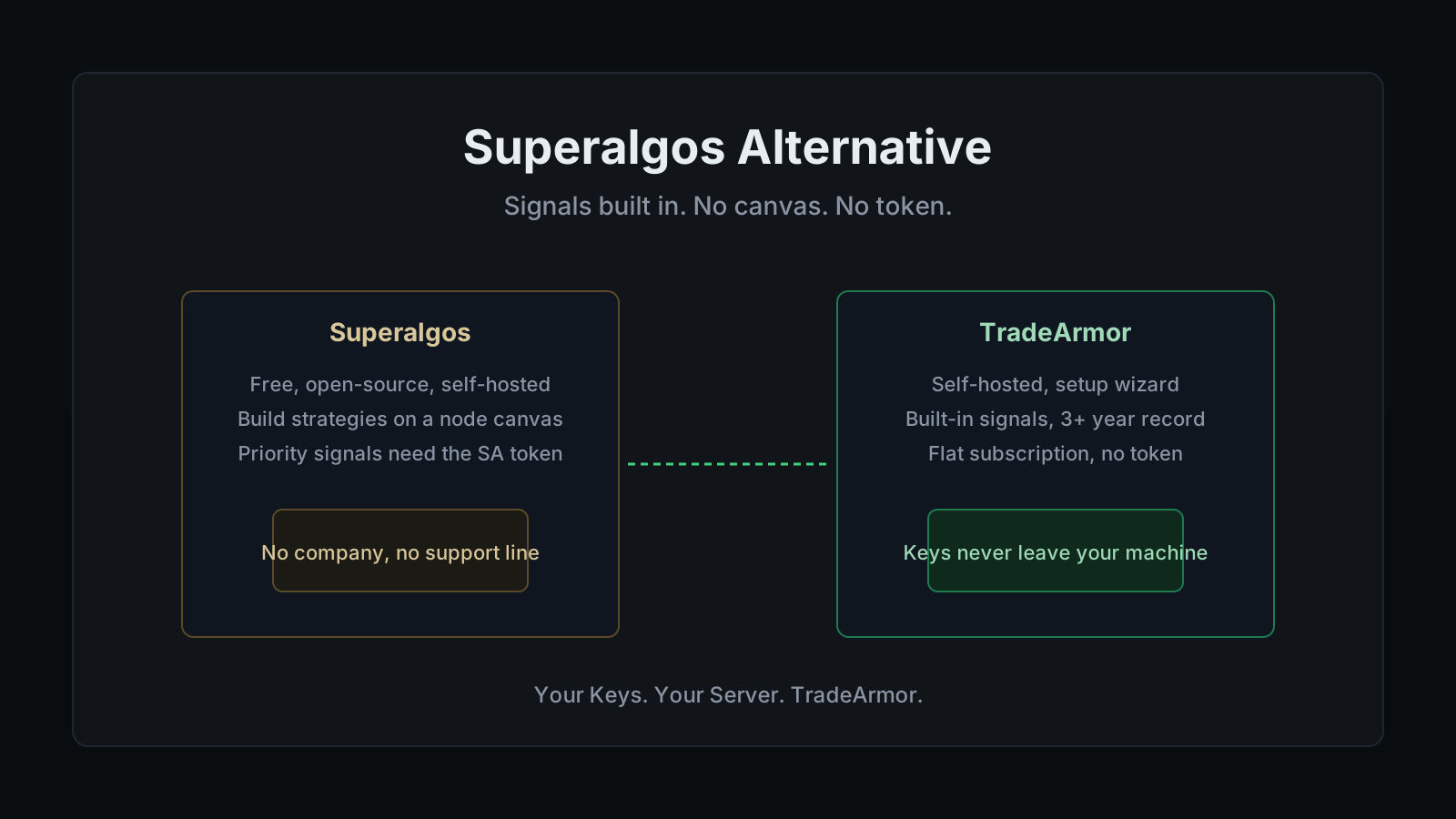
Superalgos Alternative: A Self-Hosted Peer With Signals Built In
Open Superalgos' own token-overview page today and scroll to the economics section. The page carries a 2026 copyright in the footer. The "Circulating Supply" figure two screens up is still dated August 2023. A token page that hasn't updated its own numbers since 2023 is not a red flag about the software. It's a red flag about the spreadsheet.
That distinction matters, because Superalgos the trading platform and Superalgos the token economy are two different questions, and conflating them is the easiest way to misjudge this one. The platform itself is a genuinely free, open-source, self-hosted system, the kind of thing that earns real respect in a category full of "free trial" bait-and-switches. I'm running everything on Proxmox, I want a trading bot in the stack is exactly the instinct Superalgos was built for, and it delivers on the self-hosted half of that promise honestly. Where people start looking for a Superalgos alternative is usually one step later, once they've opened the visual scripting canvas and realized they need something between plug-and-play and write-your-own, not a blank node graph and a weekend.
I build TradeArmor and I trade on it every day, self-hosted on hardware that's mine, three years of live BTC/USDC signals behind it, 15 real-time indicators, a plain-English AI strategy builder, and DCA, grid, futures, copy trading, backtesting, paper trading, and tax exports on a single engine. See the full feature set before the rest of this, because the rest of this is about one real, defensible open-source project and where it asks more of you than most traders want to give.
What Superalgos Actually Gets Right
Credit where it's due, because this is a higher bar than most "free" software clears. Superalgos runs entirely on your own machine, with no server anywhere holding your exchange API keys, which means the self-custody argument that drives most of this blog applies to Superalgos too, not against it. The project's own site states plainly that it collects no usage data and shows no ads, and unlike nearly every other name in this alternatives series, there is no premium tier at all: every feature in the core platform is free, permanently, for everyone.
It's also been around since 2018, longer than most of the SaaS bots it gets compared against, built and governed by a decentralized community of contributors with genuine staying power. There's no legal entity behind the project, which is unusual to say out loud in a piece about software, but it's also just accurate: Superalgos is a body of open-source work, not a company selling a product.
The Real Fork: A Visual Canvas vs. a Setup Wizard
Here's where the two paths actually diverge. Superalgos is a Node.js system built around a highly visual, node-based scripting environment, an HTML5-canvas interface where you construct a strategy by wiring components together rather than writing conventional code. Dragging boxes around a canvas is still programming, it just skips the part where you can grep for the bug. The project's own system requirements page recommends running the GUI and the trading client on separate machines for serious use, tested primarily on Chrome or Safari, and its documented Raspberry Pi guide deliberately keeps the graphical interface off the Pi entirely and runs it from a machine on the same network instead. None of that is a flaw. It's a platform built for people who want to construct their own trading systems from primitives, and it does that job with real depth.
TradeArmor takes the opposite default. Connect an exchange through the browser-based setup wizard, and cava-signals is already trading BTC/USDC before you've written a single rule. Custom formulas and the AI strategy builder are there when you outgrow the default, but nothing requires you to build a strategy from scratch just to get started. If what you want is a system you can eventually grow into fully custom logic without a blank canvas standing between you and your first live trade, that's the practical difference this whole comparison comes down to.
Signals: Built In vs. Token-Gated Priority
Superalgos doesn't ship one house signal. It ships infrastructure for a peer-to-peer signal network: community members build strategies, broadcast them, and earn Superalgos (SA) tokens in proportion to how many people follow their feed, a system that's been running in open beta since Q1 2022. You can connect to those feeds and trade without ever building a strategy yourself. What you're following, though, varies entirely by whichever contributor you pick, and there's no single, centrally benchmarked track record the way there is with a house signal.
The token is also where the free-forever pitch picks up a footnote. Holding SA tokens grants priority access to trading signals and to premium services like the project's collective AI-model predictions, meaning the software costs nothing but the good seat at the signal table is gated behind acquiring and holding a separate crypto asset, one with its own price chart, its own liquidity pools on PancakeSwap and 1inch, and its own market risk layered on top of whatever your trading strategy already carries.
TradeArmor's cava-signals engine is the opposite bet: one proprietary BTC/USDC signal feed, running live since 2022, with the full three-year trade history visible in your dashboard on every tier including Starter, no token, no priority queue, no separate asset to acquire first. Signals here are algorithmic outputs, not personalized investment advice, and three years of history says nothing certain about the next three. But there's a real difference between a benchmarked engine every subscriber sees the same history for and a marketplace where the quality of your feed depends on whose reputation score got you priority that week.
What You Give Up, Honestly
Moving from Superalgos to a self-hosted alternative like TradeArmor is a real trade, not a strict upgrade, and this comparison would be worthless if it pretended otherwise.
You give up the truly unlimited, zero-dollar ceiling. Superalgos costs nothing to run indefinitely, on as many bots and backtests as your hardware can carry, forever. TradeArmor's Starter plan runs $19.99 a month. You also give up the raw construction freedom of a node-based visual environment built for people who want to design entirely novel strategies and data pipelines from primitive building blocks, plus the decentralized-community model itself, if that governance style is part of why you're drawn to Superalgos in the first place. And you give up the option to earn your way in through contribution rather than payment; Superalgos rewards code, documentation, and community work with tokens, a path TradeArmor's flat subscription doesn't offer.
Pricing, Side by Side
Superalgos is $0, with no tiers, no gated features, and no premium software plan to upgrade into, a genuinely rare claim in this category. The catch sits outside the software itself: priority signal access and premium services like collective AI predictions require holding the SA token, an asset you'd need to acquire on a decentralized exchange, exposing you to its own price volatility as a separate, optional cost of admission to the good stuff.
TradeArmor runs a flat $19.99 a month for Starter (bundled cava-signals, the DCA engine, all six exchanges, one live plus two paper instances), $49.99 for Pro (adds the 15-indicator set, the AI strategy builder, copy trading, and trading groups), and $89.99 for Enterprise (adds grid, futures, and multi-machine management), each with a 30-day money-back guarantee. No token, no separate asset to buy first, no priority queue. If you're pricing the rest of the field too, the 3Commas alternative, GoodCrypto alternative, and WunderTrading alternative breakdowns cover the other names worth checking.
Who Should Switch to a Superalgos Alternative
Stay with Superalgos if you genuinely want to build a trading system from the ground up, you're comfortable running a Node.js visual-scripting environment across one or two machines, you value a decentralized, community-governed project over a company with a support line, and a zero-dollar ceiling matters more to you than a single vendor to call when something breaks.
Move to a self-hosted Superalgos alternative if you want that same self-custody guarantee without building your first strategy from a blank canvas, if you'd rather follow one benchmarked signal engine than a marketplace of contributor feeds ranked by token-weighted priority, or if "there's no support ticket to file with a project that has no legal entity, only a Discord server and the hope someone with more reputation than you is awake" describes a trade-off you're done making. If your capital is currently split across several exchanges and you want it in one dashboard regardless of which platform you pick next, the copy trading vs. bot trading guide and the becoming a signal provider walkthrough cover TradeArmor's own peer-to-peer copy trading, built with zero performance fee and no token required, a contrast to how those fees usually work on custodial platforms.
Frequently asked questions
Is TradeArmor a drop-in replacement for Superalgos? Not in the literal sense. Superalgos strategies live as node graphs inside its own visual scripting canvas, and TradeArmor has no importer for that format. It is a practical replacement for the goal most people have when they go looking for a Superalgos alternative: self-hosted automation with your exchange keys on your own machine. You get there through TradeArmor's setup wizard and three ready-made strategy modes instead of building a node graph from scratch, and if you're arriving from ProfitTrailer instead, there's a dedicated one-click migration that imports open positions and DCA legs directly.
Is Superalgos safe to use? On the architecture that matters most, yes. Superalgos is genuinely self-hosted, meaning it runs on your own machine and your exchange API keys never travel to a Superalgos-controlled server, because there isn't one. There's also no company collecting your usage data, since the project has no legal entity behind it at all, only a decentralized community of contributors. The trade-off is the flip side of that same fact: with no company, there's no support line, no SLA, and no one accountable if something breaks beyond a Discord server and a forum full of volunteers.
Do I need to buy a token to use Superalgos? The core software is free with no tiers and no gated features, and that's a real, unusual claim in this category worth crediting. Where the token enters is priority: Superalgos (SA) token holders get earlier access to community-broadcast trading signals and to premium services like the project's collective AI predictions. You can run the whole platform, build your own strategies, and never touch the token. The moment you want the priority-access version of what other people are broadcasting, you're now also exposed to a micro-cap token's own market risk, on top of whatever your trading strategy already carries.
Is Superalgos harder to set up than TradeArmor? For most traders, yes, and it's an honest trade for real flexibility. Superalgos is a Node.js system with a highly visual, canvas-based scripting environment. There's no default strategy running the moment you install it; you build one out of nodes, connect to a community data mine or your own, and the system's own documentation recommends a dedicated GUI machine plus a separate headless client for serious use. TradeArmor ships with a browser-based setup wizard and a working default: connect an exchange, and cava-signals is already trading BTC/USDC on day one. Superalgos gives you more room to build something entirely your own. TradeArmor gives you something that runs on day one and grows into custom formulas later.
What is the best self-hosted Superalgos alternative? If what draws you to Superalgos is that it's genuinely free, self-hosted, and keeps your keys off someone else's server, but what puts you off is the visual node-graph learning curve, the absence of a company to hold accountable, or a signal network gated behind holding a token, the closest match is a self-hosted platform that keeps the custody model and removes those three frictions. TradeArmor fits that: a flat subscription with a real support team behind it, a setup wizard instead of a canvas, and built-in BTC/USDC signals with a public track record running since 2022, alongside 15 technical indicators, a plain-English AI strategy builder, DCA, grid, futures, copy trading, backtesting, paper trading, and tax exports.
Does Superalgos have its own proprietary trading signal like TradeArmor's cava-signals? Not in the sense of one engine with a multi-year public track record. Superalgos is infrastructure for building and broadcasting signals: individual community members produce and share their own strategies over the Superalgos Network, earning tokens in proportion to their following. The quality of what you'd copy varies by whichever contributor you connect to, and there's no single benchmarked history the way TradeArmor's built-in BTC/USDC signal feed publishes one three-year record in the dashboard for every subscriber.
Bottom Line
Superalgos earns its reputation honestly: free forever, genuinely self-hosted, no telemetry, and a decentralized community that's kept it alive since 2018. What it asks in return is a visual-scripting learning curve most traders don't want, no company to call when something breaks, and a signal network where the best seats are priced in a token rather than a subscription. TradeArmor keeps cava-signals, 15 real-time indicators, the AI strategy builder, and every mode from DCA and grid to futures, copy trading, backtesting, paper trading, and tax exports on one engine, self-hosted, with your keys staying on your own machine the whole time. No canvas to learn, no token to acquire first, one flat subscription with a team behind it.
If that trade sounds right, the broadest case lives in the best self-hosted crypto trading bot guide, and the cleanest next step is to see the plans and start.
Past performance is not indicative of future results. Signals are algorithmic outputs, not personalized investment advice. Trading cryptocurrency carries substantial risk including the total loss of capital.
Ed Cava