There are two kinds of people who go looking for a crypto copy trading setup, and the software industry serves exactly one of them well. The first wants managed exposure without running anything: deposit money, pick a trader, let the platform mirror their moves. That person has plenty of options. The second already runs a bot, already self-custodies, and wants self-hosted copy trading: a way to share or follow signals without saying "I don't want to give my API keys to a third party" and then doing exactly that. For that second person, the options thin out fast.
This is a guide for the second person. If you have a strategy that works and you want to publish it as a crypto signal provider, or you want to follow someone else's signals, the question that decides everything is where the funds and keys live while the copying happens. On the dominant platforms, the answer is "with the platform." There is another way to do it.
TradeArmor is a self-hosted crypto trading bot you run on your own hardware, with built-in BTC/USDC signals carrying a three-year track record, 15 real-time indicators, a plain-English AI strategy builder, and DCA, grid, futures, backtesting, paper trading, and tax reporting on one engine. Copy trading is one part of that platform, built as a peer-to-peer feature where provider keys and follower keys both stay local. This post is about that one part: how self-hosted copy trading works, how to become a signal provider, and how following works when nobody in the middle is holding your money.
The Copy Trading Model You Already Know
Walk through how mainstream crypto copy trading works and the trade-off becomes obvious. You open an account, you fund it, you browse a leaderboard of traders ranked by past returns, and you allocate some of your balance to copy one. From then on, when that trader buys, your account buys proportionally. When they sell, you sell. It is genuinely convenient, and for someone who wants nothing to do with running software, it is the right product.
The plumbing underneath is the part worth understanding. eToro, the largest social trading broker, is custodial: it holds the funds and executes the mirrored trades inside its own brokerage. Zignaly runs a non-custodial framing but routes custody through an exchange partner and charges a success fee on profits, with a high-watermark mechanism so the fee only resumes after you pass your previous peak. Both are legitimate businesses. Both also share one structural fact: a third party sits between you and your coins, because the model requires it. The mirroring only works if the platform can reach into an account and place orders, which means it holds either your funds or your trade permissions.
That structure is also why a performance fee exists. The platform takes a cut of the gains because the platform is doing the holding and the executing. It is a fair trade for the person who wants managed exposure. It is a worse trade for the person who already has their own bot, their own exchange account, and a healthy skepticism of leaderboards that quietly omit the accounts that blew up.
If you want the convenience and you are fine with custody sitting elsewhere, the mainstream platforms are built for you, and you can stop reading here. If "my keys, my coins, my keys, my bot too" is closer to how you think, keep going.
See how TradeArmor's full platform fits together
What Self-Hosted Copy Trading Actually Changes
Self-hosted copy trading keeps the useful part of the model, copying a trader's entries and exits, and removes the part that requires a middleman. Here is the mechanic.
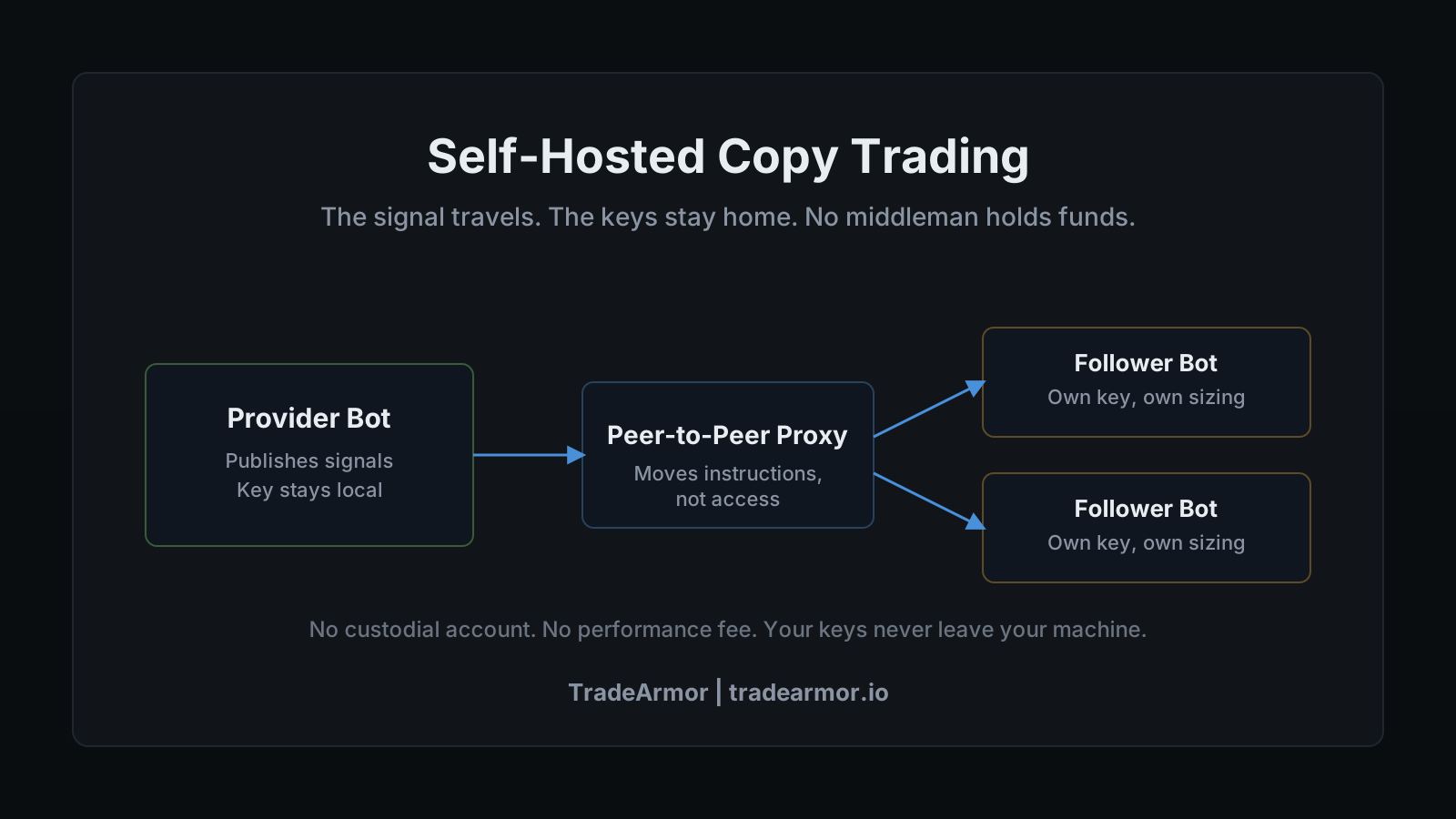
A provider runs a bot on their own machine. When the bot takes a trade, it publishes a signal: a small message that says buy this pair, or sell this position. A follower runs their own bot on their own machine, subscribed to that provider. The follower's bot receives the signal and executes it against the follower's own exchange account, using the follower's own API key, which never left the follower's hardware. The provider's key never left theirs either. The only thing that traveled between the two machines was the instruction.
On TradeArmor this runs peer-to-peer through the proxy network, the same multi-instance plumbing that lets one master bot fan a signal out to other bots across machines, operating systems, and VPN tunnels. There is no custodial account in the middle, because there is nothing for it to custody. The provider is broadcasting decisions. The follower is acting on them locally. If you want the deeper version of how a signal becomes an executed trade, the how crypto trading bots work guide covers the full path from signal to order.
Two consequences fall out of this. First, nobody holds anybody's funds, so the breach surface that worries self-custody traders, a platform database full of API keys, simply is not there. Second, because no platform sits in the middle taking a cut, TradeArmor takes no performance fee on copy trading. What a provider charges their followers, if anything, is between them. The software is not in that transaction.
How to Become a Signal Provider
If you have a strategy worth following, becoming a crypto signal provider is a configuration change, not a new product to learn. Your bot keeps doing what it already does. Provider mode adds publishing on top.
The setup looks like this. You turn on provider mode in your bot. From that point, the entries and exits your strategy takes are published to the network for subscribed followers to receive. You keep full sharing controls over what goes out, so you decide what is published rather than broadcasting every move by default. The dashboard tracks your follower count and your performance metrics, so the record you build is your actual traded record, not a backtest you curated to look good.
The honesty of that is the point. A leaderboard built from real executed trades on a self-hosted bot is harder to game than a marketing number, because the trades are the ones your own money took. A provider who has run a strategy live for a year has a year of real signals behind them. That is the kind of evidence worth following, and it is the only kind worth publishing.
A few practical notes for new providers. Run the strategy on your own capital first and let it accumulate a real track record before you invite anyone to follow it. Publishing a strategy you have run for two weeks is the trading equivalent of reviewing a restaurant from the parking lot. Pick a focus, whether that is BTC/USDC spot, a Bybit futures approach, or an altcoin rotation, and be clear about what followers are subscribing to. If you trade multiple strategies, trading groups let you keep them separate so your published signals are coherent rather than a blend of three unrelated ideas.
How Following Works
Follower mode is the other half, and it gives the follower more control than a mainstream platform usually does. You subscribe to a provider's signal stream, and then you decide how their signals translate into your trades.
Position sizing is independent of the provider. You can copy at a fixed percentage of your balance, a fixed dollar amount per trade, or pro-rata to the provider's own sizing. That matters because a provider running a six-figure account and a follower running four figures should not be taking identically sized positions, and a model that forces them to is doing the follower no favors. You set the size that fits your account and your risk tolerance, not theirs.
You can also subscribe to more than one provider at once, with per-provider enable and disable toggles, and filter which coin groups follow which providers. One provider can drive your large-cap trades while another handles a separate group, and you can switch any of them off without disturbing the rest. All of it runs alongside your own trading, so the providers you follow coexist with your cava-signal trades, your custom formula strategies, and your DCA. Copy trading is a layer on the platform, not a separate mode you have to choose instead of everything else.
One thing follower mode does not change is market risk. Copying a strong provider means executing the same kind of trades they take, and those trades can lose. Self-hosting fixes where your keys and funds live. It does not fix what the market does next, and any provider's track record is history rather than a forecast. Size accordingly.
Pricing Your Signals and Getting Paid
Because TradeArmor is not the custodial middleman, it is also not the payment processor. That is deliberate. If you want to charge followers for access to your signals, you arrange it with them directly, the way a paid newsletter or a private signal group already works, outside the software. The bot publishes the signals. The commercial relationship is yours.
This is more freedom and more responsibility at once. You are not handing a platform a percentage of your followers' gains and letting it bill them. You are also not getting an automated billing system handed to you. For a provider building a small, serious following, that trade is usually worth it, because the provider keeps the entire relationship and the platform keeps none of it. For a provider who wants a turnkey monetized leaderboard with billing built in, a custodial platform that takes a fee is the better fit, and that is a fair trade to make in the other direction.
Whatever you charge, keep the framing clean. Signals are algorithmic outputs from a strategy, not investment advice, and a track record is evidence of what happened, not a promise of what will. Providers who blur that line are the ones who end up with angry followers and, eventually, with regulators reading their marketing copy. Publish the record, describe the strategy, and let people decide.
Signal Hygiene and Privacy
Good signal provision is mostly discipline, which should sound familiar if you have read anything else here. Publish signals from a strategy you actually run, keep your published set coherent, and do not chase your followers' approval by deviating from the system that earned the track record in the first place. The fastest way to lose a following is to abandon the strategy people subscribed to the moment it has a normal drawdown.
On privacy, the self-hosted model gives you defaults the custodial model cannot. Your sharing controls govern what is published, so being a provider does not mean exposing your whole account. Your keys stay local whether you are a provider or a follower, which is the same custody posture the rest of the platform takes and the same reason a bot that never asks for withdrawal permission is the only kind worth running. The network moves instructions, not access.
The Short Version
Mainstream crypto copy trading is a custody-and-fee model: a platform holds the funds, mirrors a trader, and takes a cut. It works well for people who want managed exposure and nothing to run. Self-hosted copy trading is a different shape for a different trader. A provider publishes signals from a bot on their own hardware, a follower executes them on a bot on their own hardware, both keys stay local, no platform holds funds, and TradeArmor takes no performance fee. You give up turnkey billing. You keep custody, control, and the entire relationship with your followers.
TradeArmor is the self-hosted platform that copy trading runs on, alongside built-in signals, 15 indicators, the AI strategy builder, DCA, grid, futures, backtesting, paper trading, and tax reporting, all on one engine you run yourself. If you want to publish a strategy or follow one without handing your account to a stranger, that is the setup.