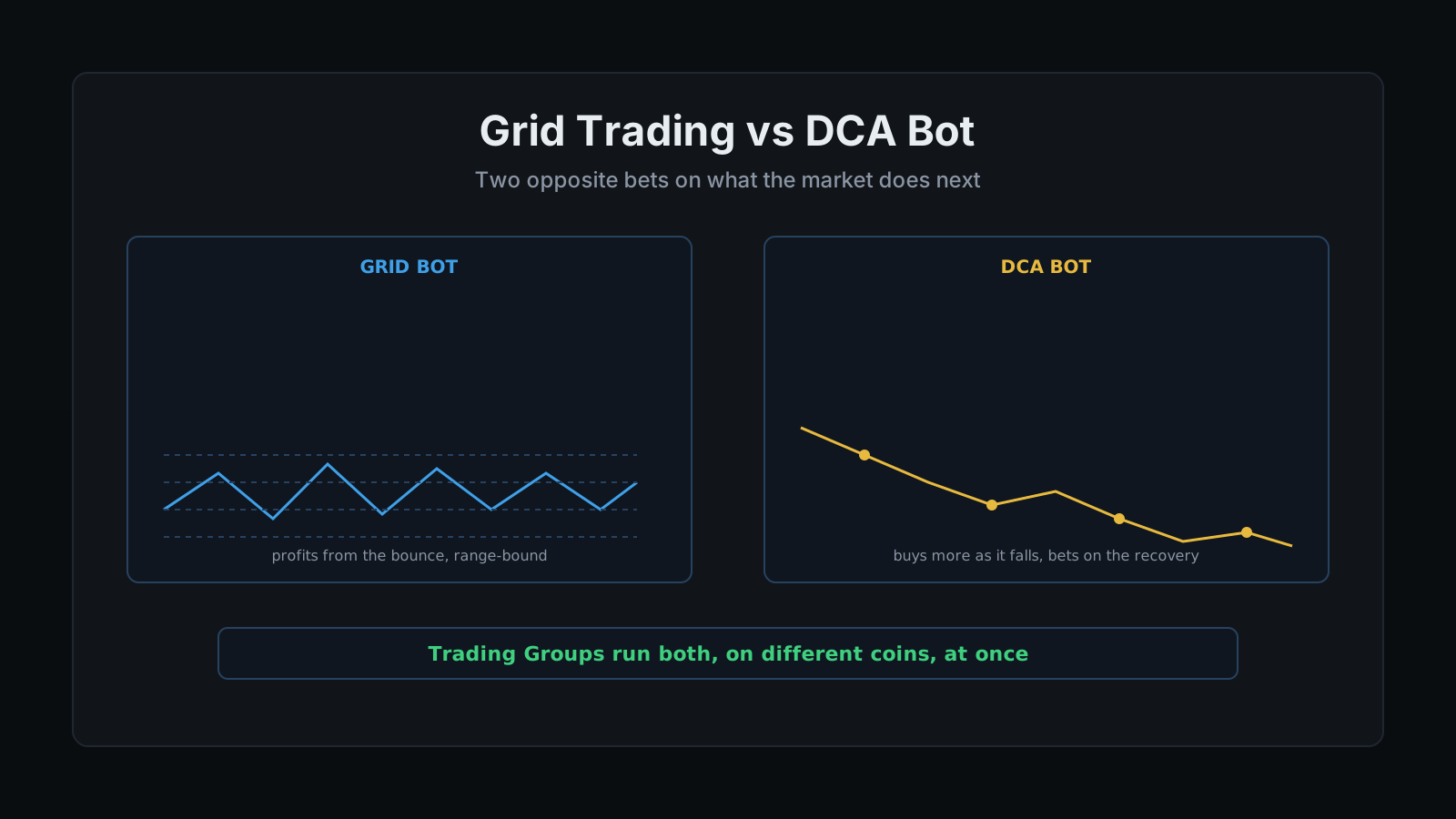
A grid bot and a DCA bot are selling you the same promise: set the rules once, stop staring at candles, let the engine handle the buying and selling. They deliver on that promise by betting on opposite things. Grid trading vs DCA bot is not really a matter of taste. It's a bet on whether the market you're pointing the bot at is going to range or trend, and picking the strategy that bets on the wrong one is how a rule that backtested fine turns into dead capital in a live account.
Most people don't pick wrong on purpose. They pick whichever mode the last YouTube video happened to be about, run it on whatever coin they already hold, and find out which market regime they actually got three weeks later when the equity curve stops cooperating. That's a guess dressed up as a strategy choice, and it's exactly the trap that opens up for anyone who wanted something between plug-and-play and write-your-own-Python: grid and DCA both promise a mode you can turn on without hand-coding a boolean strategy, and neither one tells you upfront which market it actually expects.
The platform I trade on is TradeArmor, self-hosted on a machine I own, with a three-year live BTC/USDC signal record, 15 real-time indicators, a plain-English AI strategy builder, and every mode from DCA and grid to futures, copy trading, backtesting, paper trading, and tax exports running through one engine. Grid and DCA are two of those modes, not two different products, which matters more than it sounds like it should once you get to the part of this guide about running both at once. See how the full platform fits together before you decide which single mode to point at a single market.
Grid Trading vs DCA Bot: The One Question That Actually Decides It
Strip away the marketing and the question underneath grid trading vs DCA bot is simple: is this market going to bounce around inside a range, or is it going to go somewhere and keep going? Everything else, the order count, the spacing, the cooldowns, is tuning. Get the regime question wrong and no amount of tuning saves the strategy.
How a Grid Bot Actually Makes Money
A grid bot divides a price range into evenly spaced levels and parks a resting order at each one, buys below the current price, sells above it. Every time price crosses a level in either direction, the bot locks in a small, fixed gain and immediately resets that level for the next bounce. It does not care which direction price moves next. It only cares that price keeps moving, in both directions, inside the box you drew for it.
That is the whole edge. A grid bot converts chop, the thing that makes directional traders miserable, into a stream of small realized profits. The more times price oscillates inside the range, the more times the bot gets paid.
Set a ten-level grid across a coin chopping between $95 and $105, and every full round trip through a level banks a small, fixed slice of that $10 range, whether price is heading up or down at the moment it crosses. Ten round trips in a choppy week is ten small wins. Zero round trips because price sat still is zero wins and zero losses. The grid only gets hurt once price leaves the box entirely, which is exactly the scenario the next section covers.
How a DCA Bot Actually Makes Money
A DCA bot makes a different bet entirely: that a dip is temporary. It buys a position, and if price falls, it buys more at each configured level below, lowering the average cost of the whole position, then sells the entire thing once price recovers past a target. Dollar-cost averaging as a concept predates crypto by decades. What a gated DCA engine adds on top, the part our simple-vs-gated comparison covers in depth, is a buy gate that stops the bot from averaging down mindlessly into a crash with no floor.
DCA doesn't care whether the market chops sideways along the way. It only cares that the dip eventually ends and price comes back. That is a very different assumption than a grid bot's, and it is why the two strategies fail in opposite market conditions.
Where Each One Breaks
A grid bot in a strong, sustained uptrend keeps selling into the climb at its fixed upper levels and runs out of grid room before the move is anywhere near over. It locks in a string of small wins on the way up and then sits in cash, on the sidelines, for the rest of the trend. That's not a crash. It's a strategy quietly leaving most of the gain on the table while still technically "working."
A grid bot in a real downtrend is worse. Price blows through the bottom of the range, the bot has already spent its buy orders on the way down, and it's left holding units bought at every level with no lower level left to fire and no upper level in reach to sell out of. That's whipsaw's uglier cousin: not a fast reversal that stings and passes, but a one-way break that leaves the bot holding the bag with the range itself gone.
A grid bot in a strong uptrend is technically still working. It's just working against you, one perfectly executed sell at a time.
A DCA bot's failure mode runs the other direction. In a sustained, structural downtrend, a DCA bot keeps buying dips that keep being dips, extending the position and tying up more capital at every level without a bounce to sell into. The engine isn't broken. It's doing exactly what it's configured to do in a market that stopped rewarding that behavior a while ago.
The Real Fix: Gate the Choice With a Trend-Strength Read, Not a Guess
Guessing which regime you're in is how both strategies end up in the wrong market. TradeArmor's 15 built-in indicators include ADX, which measures how strongly price is trending regardless of direction, and it's a better regime filter than eyeballing a chart and hoping. A low ADX reading generally marks a range where a grid bot has room to breathe. A rising ADX marks a developing trend, the exact condition where a grid gets run over and a DCA position risks extending into a fall with no bottom in sight.
Run that read through the backtester against your own pair's history before trusting it live. If you want to see the DCA side of that math before committing an account to it, TradeArmor's free DCA Backtester runs a gated DCA setup against real historical data and shows the equity curve, drawdown, and the exact buy levels it would have triggered, no account required. Past performance is not indicative of future results, on a backtest or a live signal, and a threshold that fit last quarter's regime is a starting point, not a guarantee for this one.
Run Both at Once Instead of Picking One Forever
Here's the part most bot platforms don't let you do at all: you don't actually have to pick one strategy for your whole portfolio. TradeArmor's Trading Groups let you split coins into independent groups, each running its own strategy mode, its own position count, its own rules, on the same instance and the same subscription. BTC and ETH can sit in a gated DCA group riding out a broader trend while an altcoin that's been chopping sideways for three weeks runs in a grid group right next to it.
Most SaaS bots price that setup as two separate bot subscriptions, sometimes two separate accounts. Here it's one dashboard, split into groups, on one bill.
Grid Trading vs DCA Bot: A Two-Question Decision Routine
Before switching either strategy on, ask two questions instead of one. First, what does a trend-strength read like ADX actually say about this pair right now, not what you feel about the chart. Second, does the answer differ by coin, because it usually does, and that's exactly what Trading Groups exist to let you act on instead of forcing a single, portfolio-wide guess.
Grid trading vs DCA bot was never a question with one permanent answer. It's a read you take again every time the regime might have changed, backed by an indicator instead of a hunch, on a platform that runs the DCA engine, the grid bot, the backtester, and both at once on hardware you control. TradeArmor is where I run that decision every week instead of guessing. See the plans and get started.